Aleksandr
Vechenkov
Octopus OS
Octopus OS is a desktop app for AI agents, built around self-evolution. Talk or type to them, ask them to write code, research something, or work with your files and apps.
The difference is that agents can change the system they work in while a task is still running. They can add a missing tool, reorganize their work, or set up what should bring them back to it later. Those changes stay available for future tasks, within the permissions you give them.
I spent eight months developing Octopus before publishing the open-source Research Preview. I am now actively looking for contributors. It was built as a product from day one and is usable today.
Code counts are from October 10 and include adapted code. They exclude dependencies, tests, and generated files.
An environment agents can change
An agent needs more than a model: somewhere to work, tools it can use, and a way to keep track of what it is doing. That surrounding setup is often called a harness.
In Octopus, that setup is editable data. Agents can change how their work is organized, what information reaches them, and which tools they use, without stopping the task. Self-improvement is the research question: do those changes help them do better work over time?
The desktop app
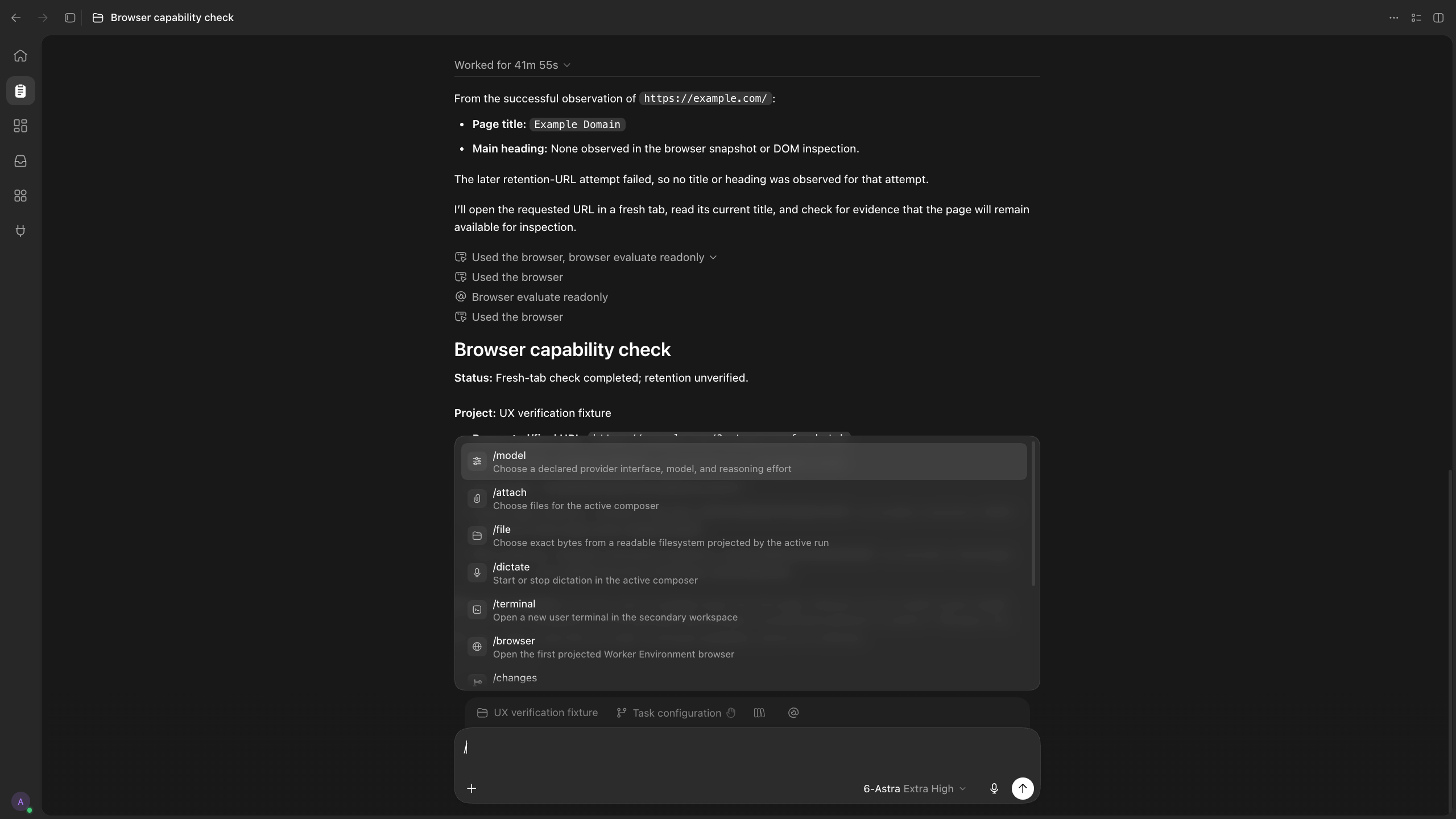
The desktop app combines a full product for everyday work with professional tools for monitoring the system.
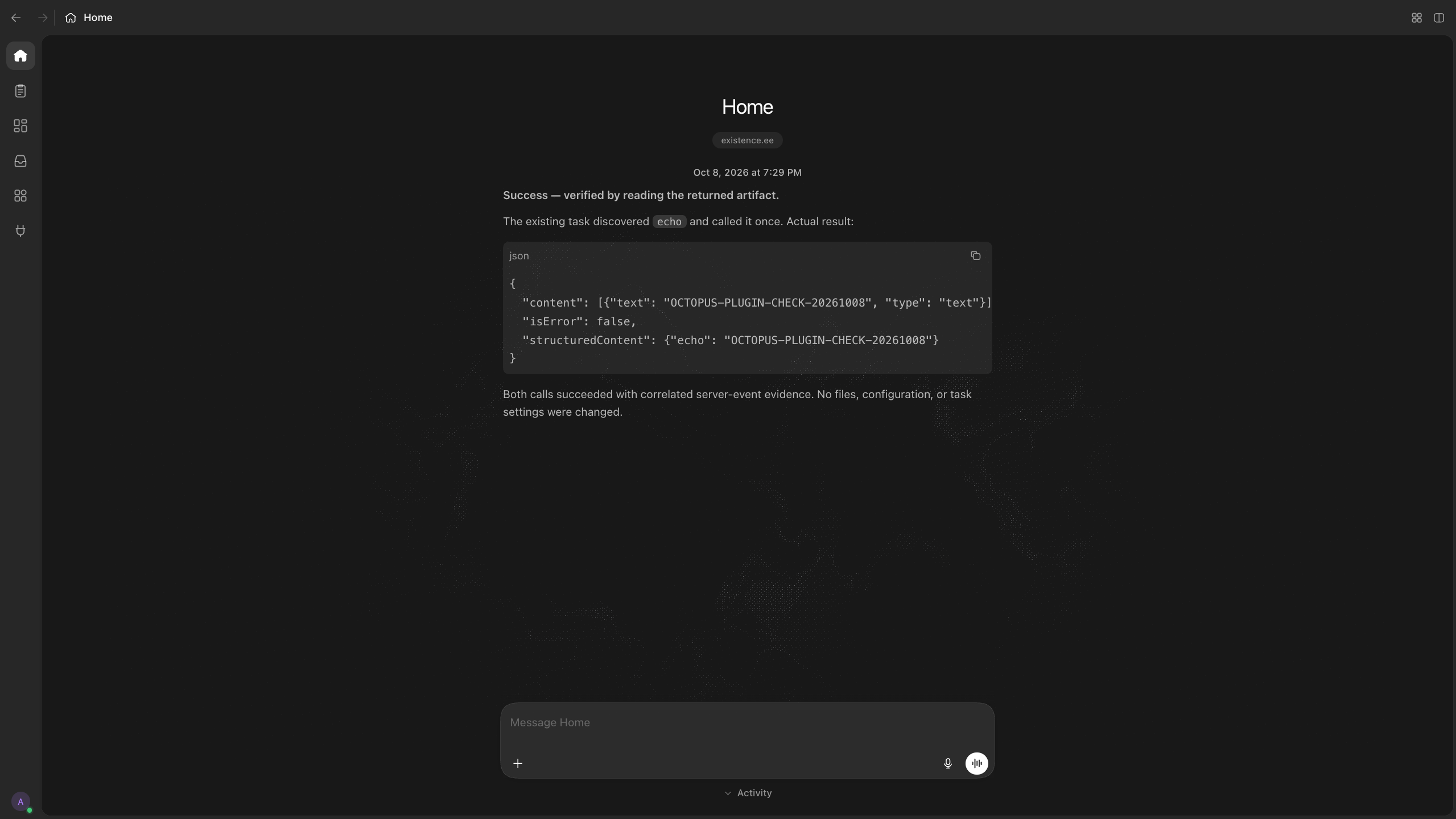
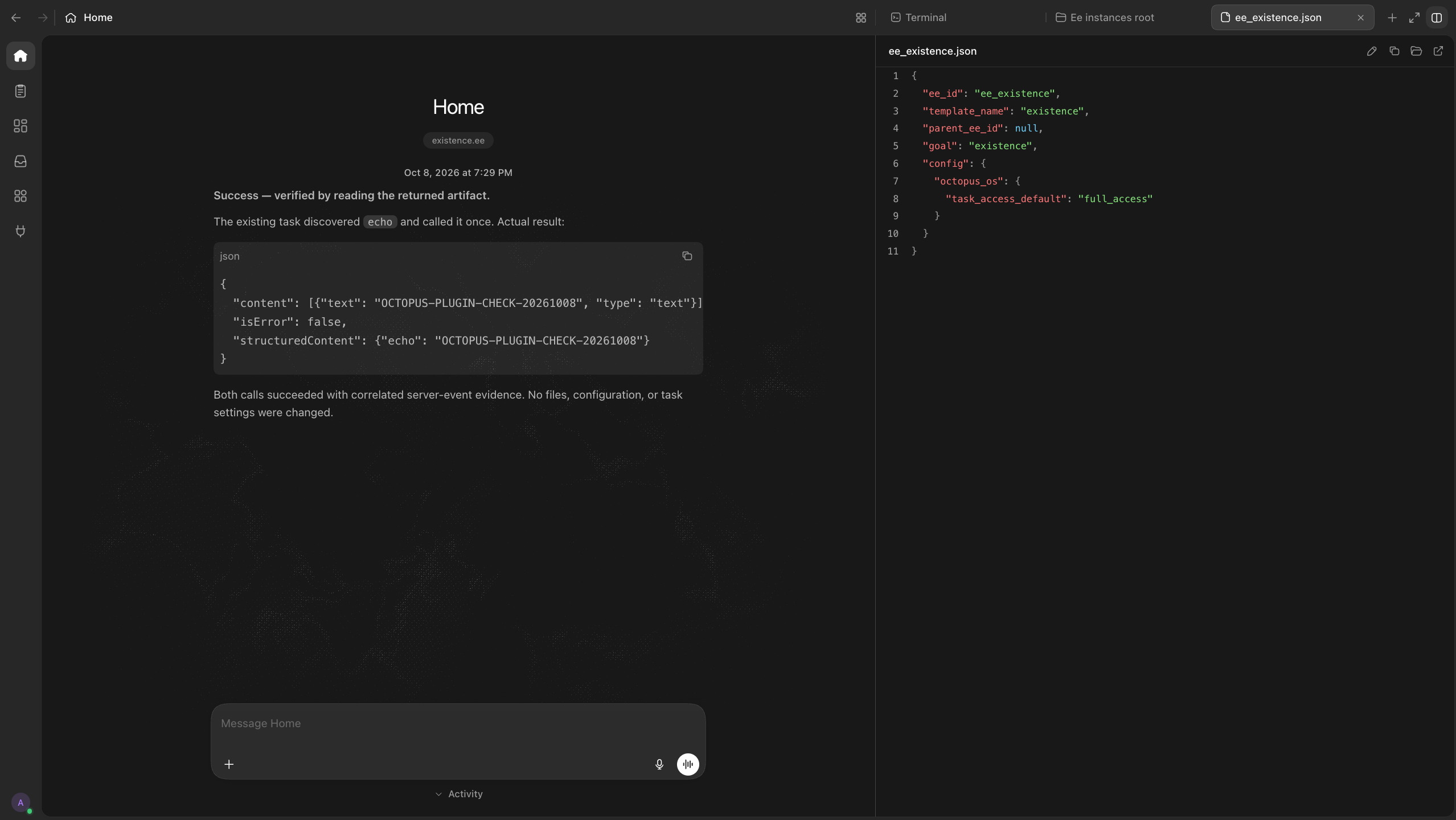
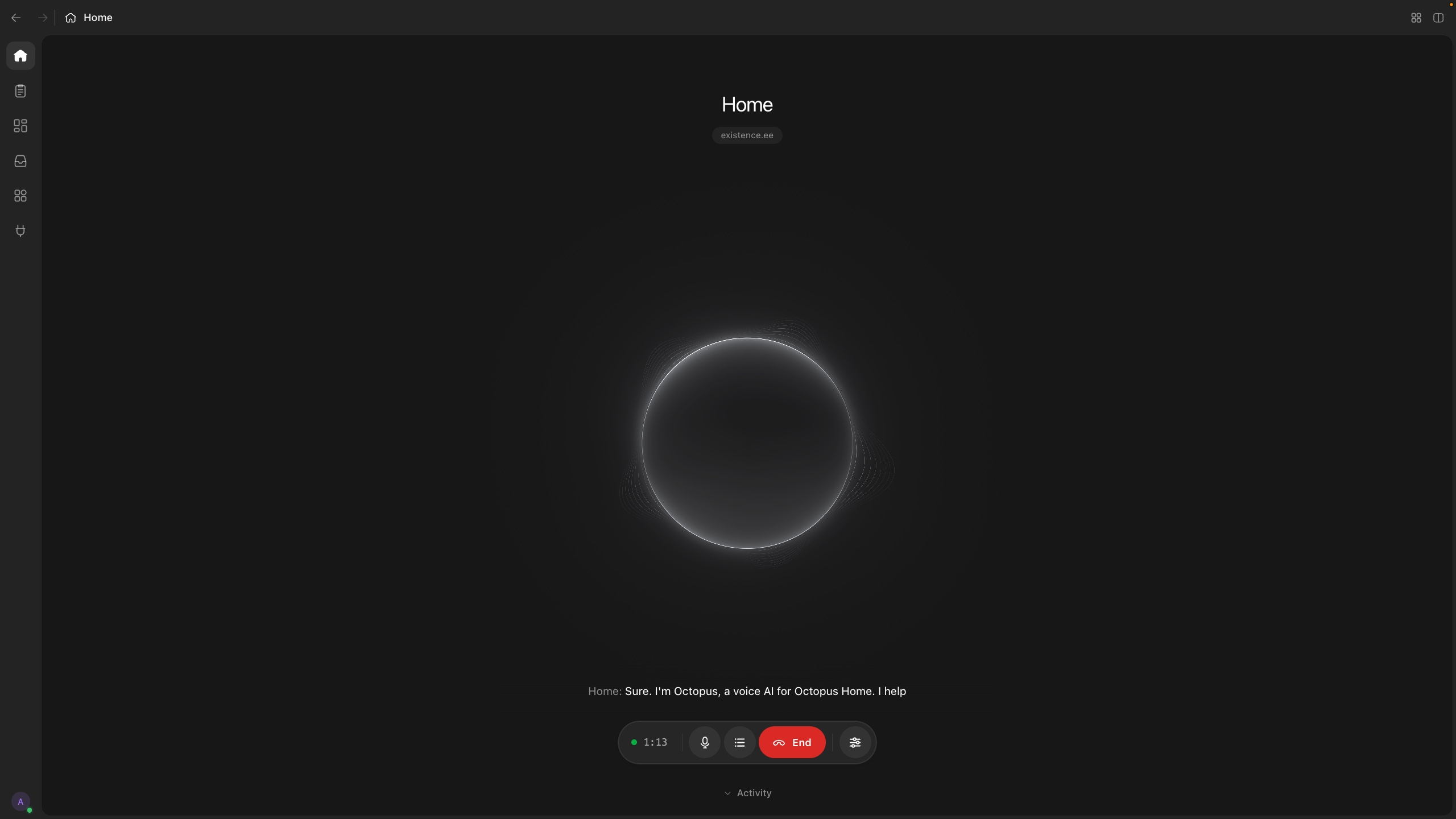
Home is the main workspace. Talk by voice or type, create live widgets, discuss ideas, research, and get work done. From there, launch sub-agents and follow their work as the system runs.
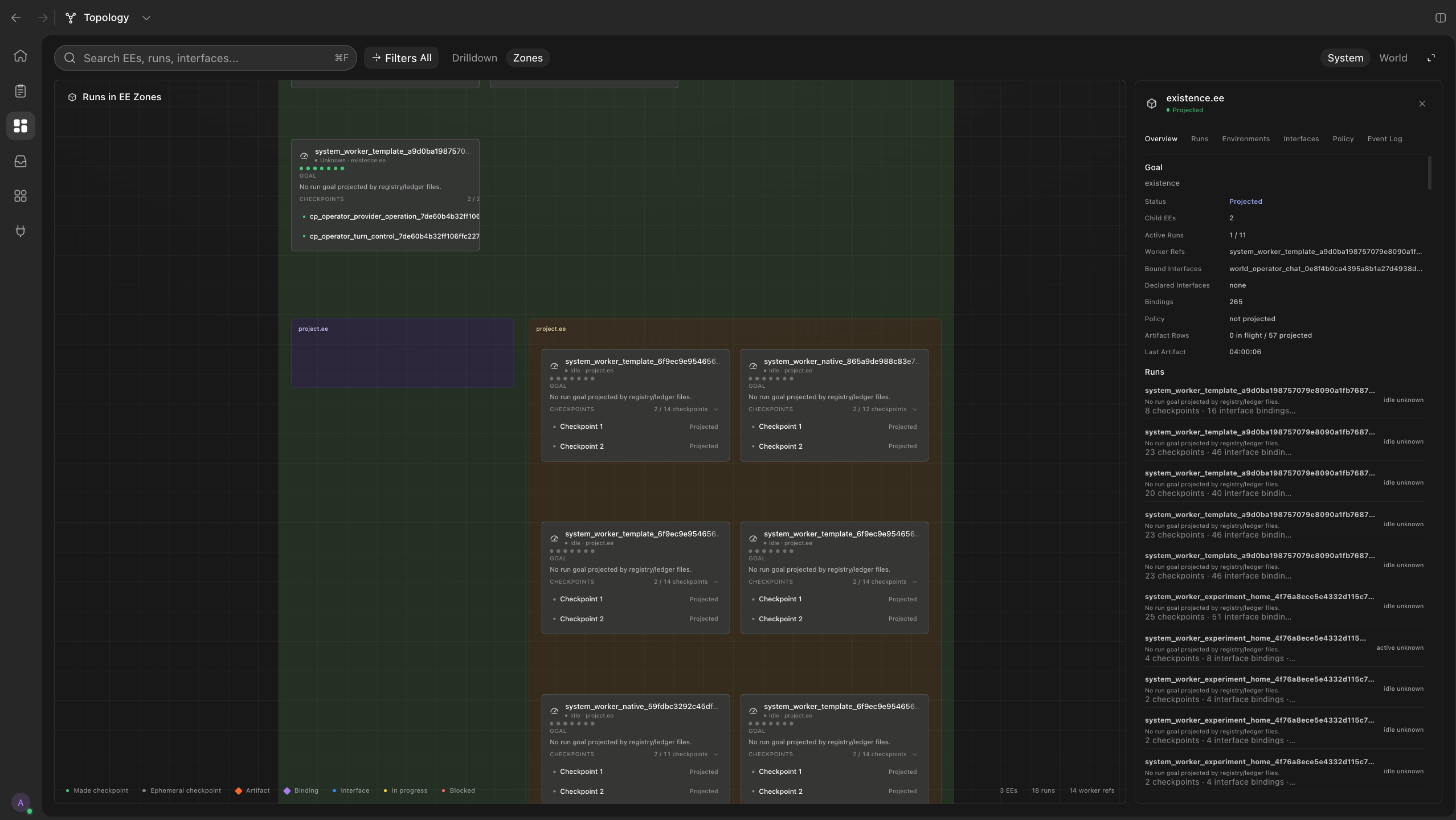
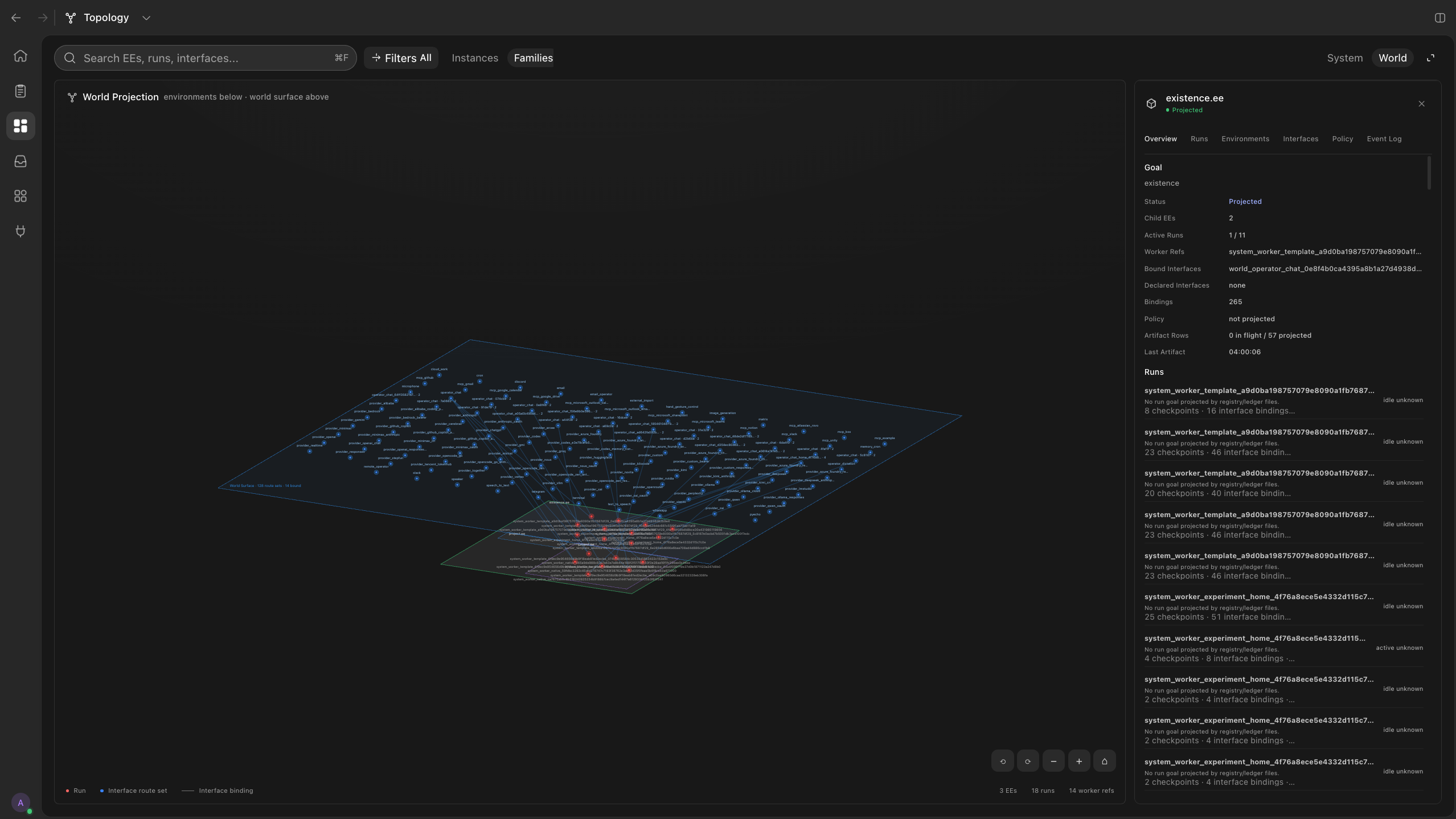
Alongside Home, inspect live system activity, connect services through Applications, and choose where tools run through Drivers. Projects, agents, applications, and drivers are different views of the same underlying system. The terminal app shares the same projects, agents, and tasks.
What I built
Over eight months, I designed a new architecture for agent execution around a small Rust core. The desktop app took three months to build, using the Codex source for its agent capabilities.